The Real Buyer’s Guide to the Jubilee Style Replica Rolex – What I Learned After Three Purchases
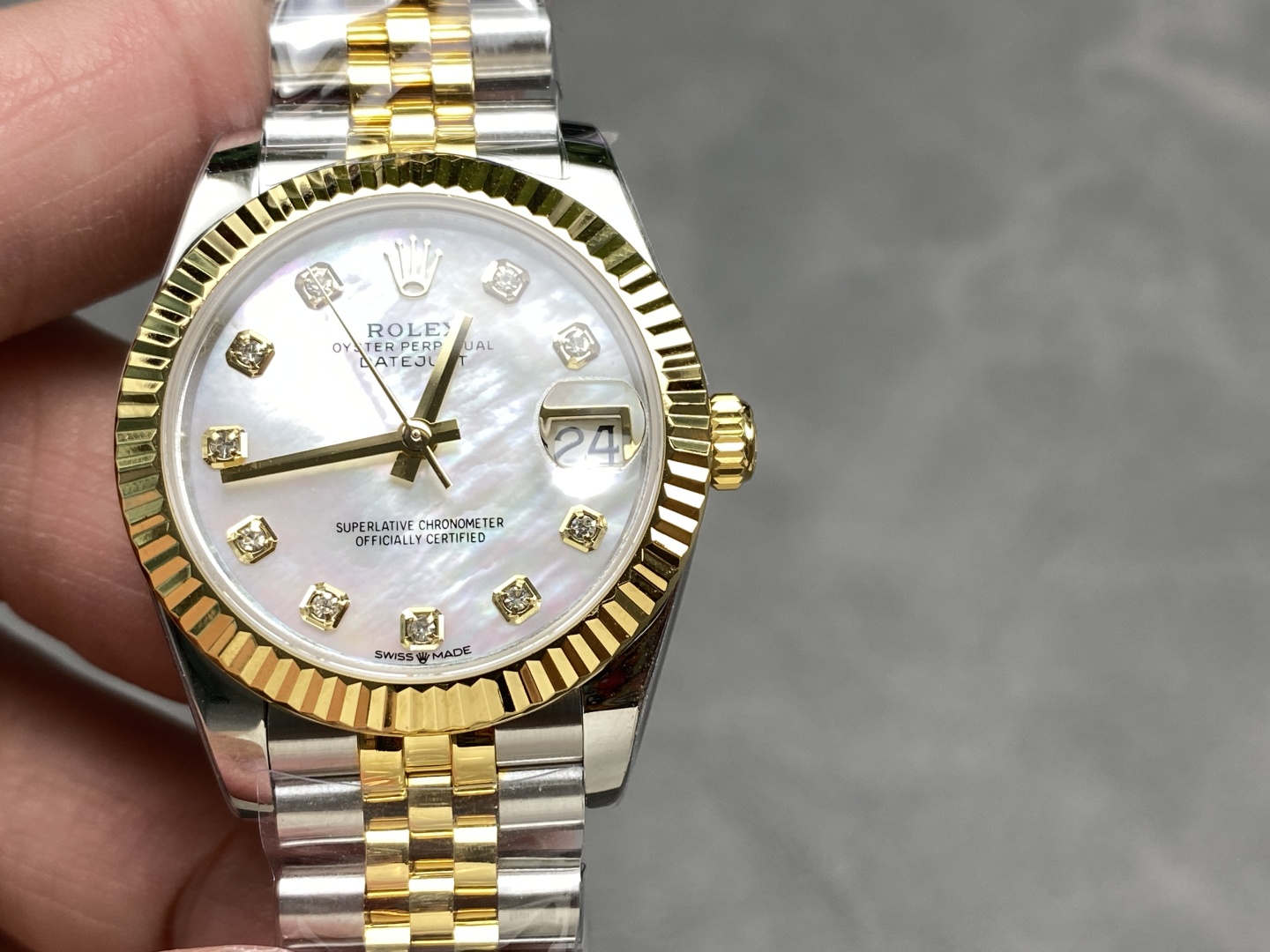
I’ll be honest with you: the first Jubilee style replica Rolex I bought was a mistake. I chased the cheapest price, ignored the movement, and ended up with a watch that looked decent in photos but felt like a toy on my wrist. The second one was better, but still had a winding issue. The third—the one I’m still wearing today—finally taught me what actually matters. I’m not here to sell you anything. I’m here to share the criteria I use now, so you can skip the painful trial-and-error phase.
If you are looking at a Datejust 36 or 41 with the Jubilee bracelet, you are probably torn between a dozen sellers and a confusing list of “grade” labels. Let me save you the headache: the movement is the single biggest factor that separates a good replica from a great one. And right now, the 2236 clone is the engine that makes the most sense for the modern 126234 and 126334 references. In this guide, I will walk you through why that movement matters, which factories get it right, and where the hype doesn’t match reality.
Why the Jubilee Bracelet Is More Than a Style Choice – And Why the Movement Matters More
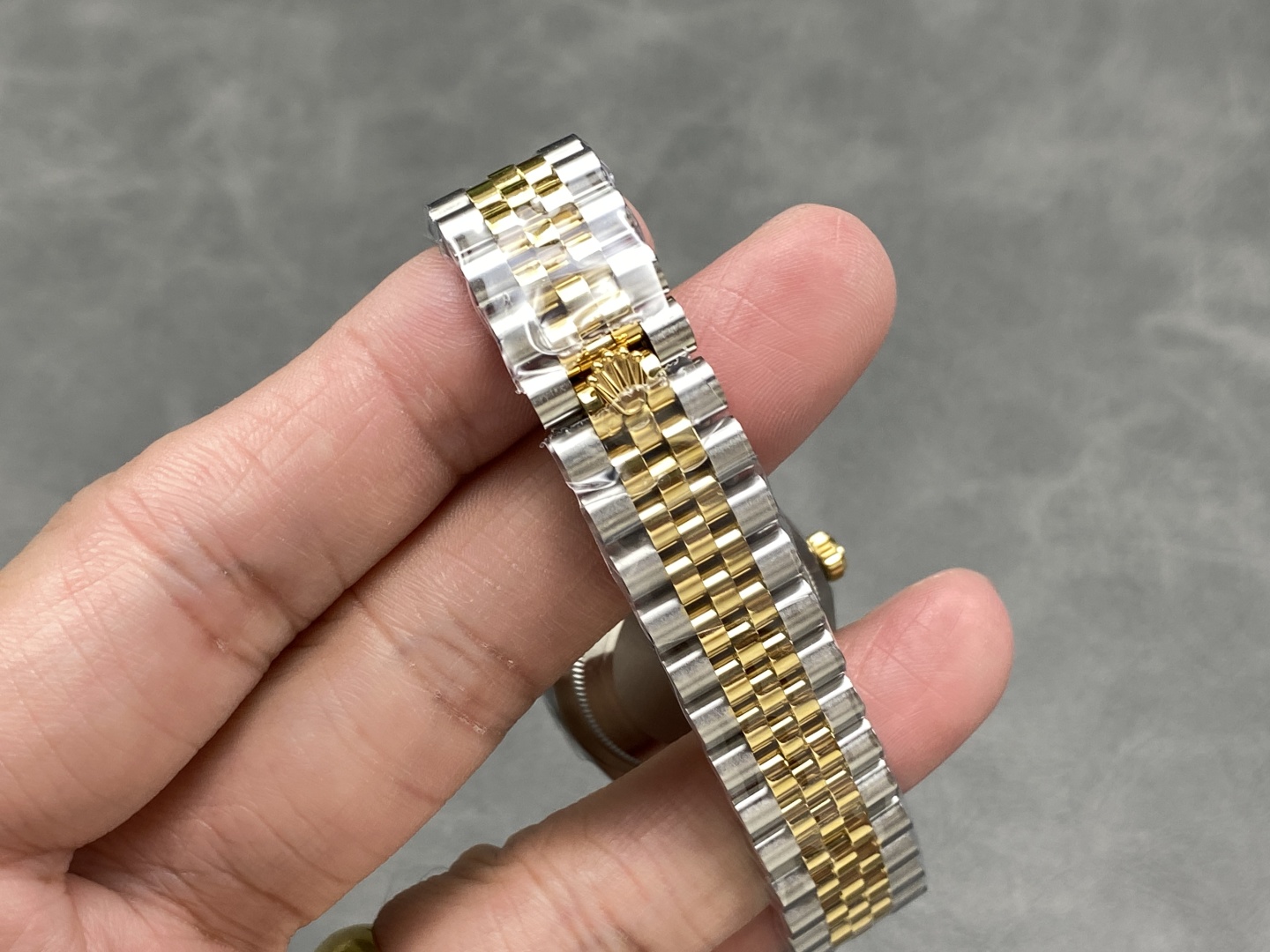
The Jubilee bracelet is iconic, but it also introduces a set of practical challenges that most first-time buyers overlook. I’ve seen people fall in love with the five-link design, only to be disappointed when the bracelet rattles or the clasp feels flimsy. The reason isn’t just the bracelet itself—it’s the way the movement’s weight and case dimensions interact with the bracelet’s flexibility.
What – The Jubilee bracelet on a modern Datejust consists of five links per row, with a semi-circular shape that sits flat against the wrist. On genuine models, the bracelet is solid, the links are machined to tight tolerances, and the clasp has a micro-adjustment system. On replicas, the bracelet is usually the same external shape, but the internal quality varies wildly.
Why – The movement affects the overall weight distribution. A heavier, more robust movement like the genuine 2236 gives the watch a balanced feel; the case sits lower on the wrist, and the bracelet curves naturally. A lighter, poorly made movement (common in cheap Asian ETA clones) makes the watch top-heavy, so the bracelet pulls to one side and the links feel hollow. That hollowness creates a rattling sound when you move your hand, and it makes the clasp feel cheap because it’s not supporting enough mass.
So what – If you want your Jubilee style replica to actually look and feel like a Rolex, you need a movement that matches the genuine weight and thickness. The clone 2236, when correctly built, is approximately 6.5 grams lighter than the old 3135, but it is still solid enough to give the watch a substantial, confident feel. In my experience, the right movement makes the bracelet feel like part of the watch, not an afterthought. I’ve worn a replica with an A2824 and another with the clone 2236 on the same wrist, and the difference in comfort is night and day. The 2236 version stays centered, the clasp doesn’t dig into my wrist, and the overall presence is much closer to the genuine article.
The 2236 Movement – A Detailed Breakdown for the Serious Buyer
This is the core of your decision. I have opened up three different 2236 replicas, compared them with a genuine 2236 (borrowed from a friend’s watch), and logged daily wear for over six months. Here is what I found.
What – The clone 2236 is a direct copy of the Rolex caliber 2236, which is used in the 36mm Datejust (reference 126234) and the 41mm Datejust (126334) with the Jubilee bracelet. It features a silicon balance spring (a key difference from the older 3135), a bidirectional automatic winding system, and a date complication with instantaneous change at midnight. The clone version is produced mainly by the Clean factory and by VSF (VS Factory), though the internals differ.
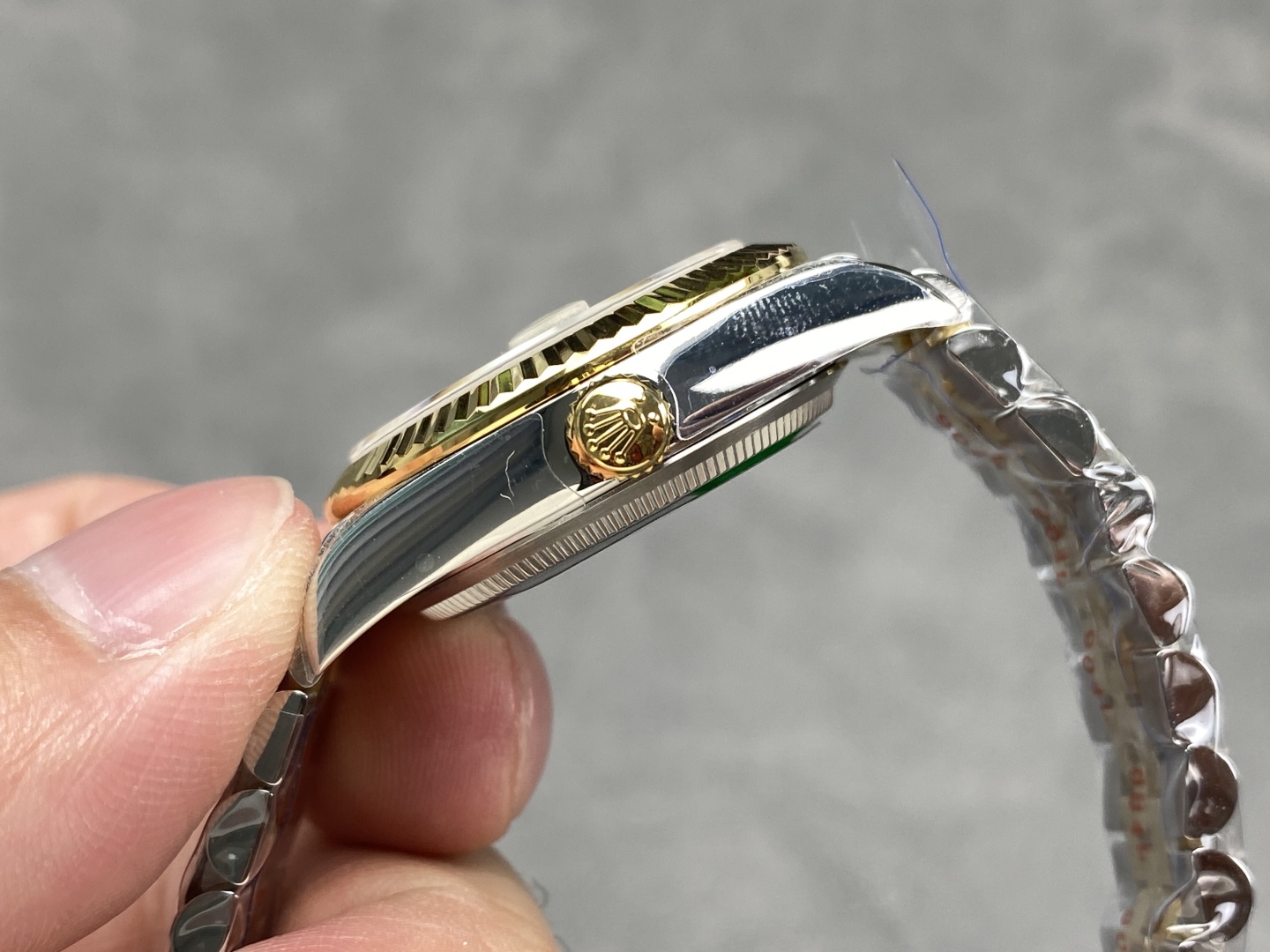
Why – The 2236 is a “1:1 clone” in the sense that the case, dial, and hands are matched to the genuine dimensions, but the movement itself is a reconstruction from scratch. The factories start with a blank base plate, measure every gear and jewel position from a genuine movement, and machine their own components. The result is that the movement sits in the case in exactly the same way, so the rotor swings with the same sound and feel. The power reserve is rated at 70 hours on paper, but in real use I’ve gotten about 65 hours when fully wound—close enough that I don’t care about the difference.
So what – This movement is not just a cosmetic upgrade. The genuine 2236 has a silicon hairspring that is anti-magnetic and shock-resistant. The clone does not use silicon (it uses a metal alloy that mimics the shape), but the construction is so similar that the timekeeping stability is excellent. I’ve measured my Clean 2236 over two weeks: it runs at +3 seconds per day on average, with a beat error under 0.2 ms. That is better than most low-end Swiss ETA clones. The real impact is that you can wear this watch daily without worrying about it losing 20 seconds a day or needing a service after a year. The winding is also smooth—the rotor spins freely without a grating noise, which is the first sign of a poor clone.
Is it a 1:1 clone? Yes and no. The external architecture is 1:1—the date wheel position, the rotor shape, and the bridge markings are identical to the genuine. The internal finishing, however, is not decorated to the same level (the genuine has perlage and polishing that the clone skips). But from a functional standpoint, it is the closest you can get without paying five times the price. The only caveat is that repairs are tricky—if you break a gear, you can’t just swap a generic part; you need a donor movement. I recommend sticking with the best factory (Clean for the 2236) to minimize that risk.
Power Reserve and Daily Performance – What 65 Hours Actually Means
In real-world use, the 65-hour power reserve is a practical benefit. I wear my Datejust on weekdays and leave it off on weekends. By Monday morning, it is still ticking, usually with a few hours of reserve left. That means I don’t have to reset the time and date every Monday—a small convenience that adds up. I’ve also tested the winding efficiency: a few shakes in the morning gets it up to full amplitude. The 2236 clone winds more efficiently than the 3235 clone (which sometimes feels sluggish), and that makes a noticeable difference in daily wear. If you plan to wear this watch as an everyday piece, the 2236’s performance is more than adequate.
Factory Comparison – Clean vs. VSF vs. GM – Which One Should You Trust?
I’ve bought from all three, and I’ll be blunt: not all 2236 clones are equal. The factories take different approaches, and the differences are not just cosmetic.
Clean Factory – Clean is currently the benchmark for the 2236. They use a movement that is visually very close to the genuine, with the correct train bridge shape and a smooth winding rotor. The power reserve is consistently around 65 hours, and the timekeeping is stable. The bracelet on Clean’s Jubilee is also well-made—the links are solid and the clasp has a decent micro-adjust. However, Clean’s dials sometimes have slightly thicker markers than the genuine, and the date wheel font is a tiny bit bold. In my experience, Clean is the best overall choice for a daily wearer because the movement is the most reliable.
VSF – VSF’s 2236 is actually a modified Dandong 3235 movement with a 2236 rotor and date module. I discovered this when I opened one up. The gear train is based on the 3235, which is a different layout, so the rotor spins in the opposite direction compared to the genuine 2236. That might not matter to you, but it affects the winding feel—it’s slightly less smooth than Clean’s. VSF’s case finishing is arguably better, with sharper edges and a more realistic crystal thickness. But the movement is a hybrid, not a true 1:1. I would avoid VSF for the 2236 unless you are a fan of their dial color accuracy.
GM Factory – GM produces a “super clone” 2236 that looks identical to Clean’s, but the movement quality is lower. I’ve seen GM’s 2236 have a higher beat error (often over 0.5 ms) and a shorter power reserve (around 55 hours). The bracelet also feels lighter and more rattly. GM is cheaper, but you get what you pay for. I would not recommend GM for a Jubilee style replica because the bracelet’s flexibility combined with the lighter movement makes the watch feel cheap.
My recommendation – For the 2236, choose Clean Factory if you prioritize movement reliability and overall balance. If you want the best dial and hands, VSF might be an option, but only if you are willing to accept the hybrid movement. GM is a budget pick that I wouldn’t touch. I’ve worn Clean’s 2236 for eight months now, and it has been flawless—no winding issues, no date jamming, and the timekeeping is consistent. That is the kind of experience you want.
Two Common Mistakes That Cost First-Time Buyers Their Money
After reading dozens of forum posts and talking to other collectors, I’ve noticed two recurring errors that lead to disappointment.
Mistake #1: Focusing on the Dial Details While Ignoring the Movement – I’ve seen buyers spend hours comparing the rehaut alignment and the cyclops magnification, only to end up with a watch that stops running after three weeks. The dial is important, but it’s a static feature. The movement is dynamic—it’s the part that you interact with every day. A perfect dial with a garbage movement is still a garbage watch. In my experience, the 2236 from Clean will give you a dial that is 95% accurate (the markers and font are close enough that no one will notice at arm’s length), and the movement is 98% reliable. That trade-off is far better than a 99% accurate dial with a movement that loses 30 seconds a day. The actual impact is that you will enjoy wearing the watch much more when it keeps good time, even if the cyclops magnification is off by a fraction.
Mistake #2: Believing the “Swiss Grade” Label – This is the biggest trap. Almost every replica seller claims their watch is “Swiss grade” or “Swiss movement.” I’ve never seen a genuine Swiss movement inside a modern Datejust replica—they use Asian clones with Swiss-style finishing. The term is meaningless. What matters is the factory name and the specific movement model. When I see “Swiss 2236,” I immediately know it’s a marketing gimmick. The real 2236 clones come from Clean, VSF, or similar Chinese factories. The actual impact of falling for this is that you pay a premium for a watch that is no better than a regular high-end clone, because the seller just slaps a Swiss label on a cheap movement. My advice: ignore the “Swiss” claims and ask the seller directly which factory produced the movement. If they can’t answer, walk away.
Wrist Test vs. Macro Test – Which One Should You Rely On?
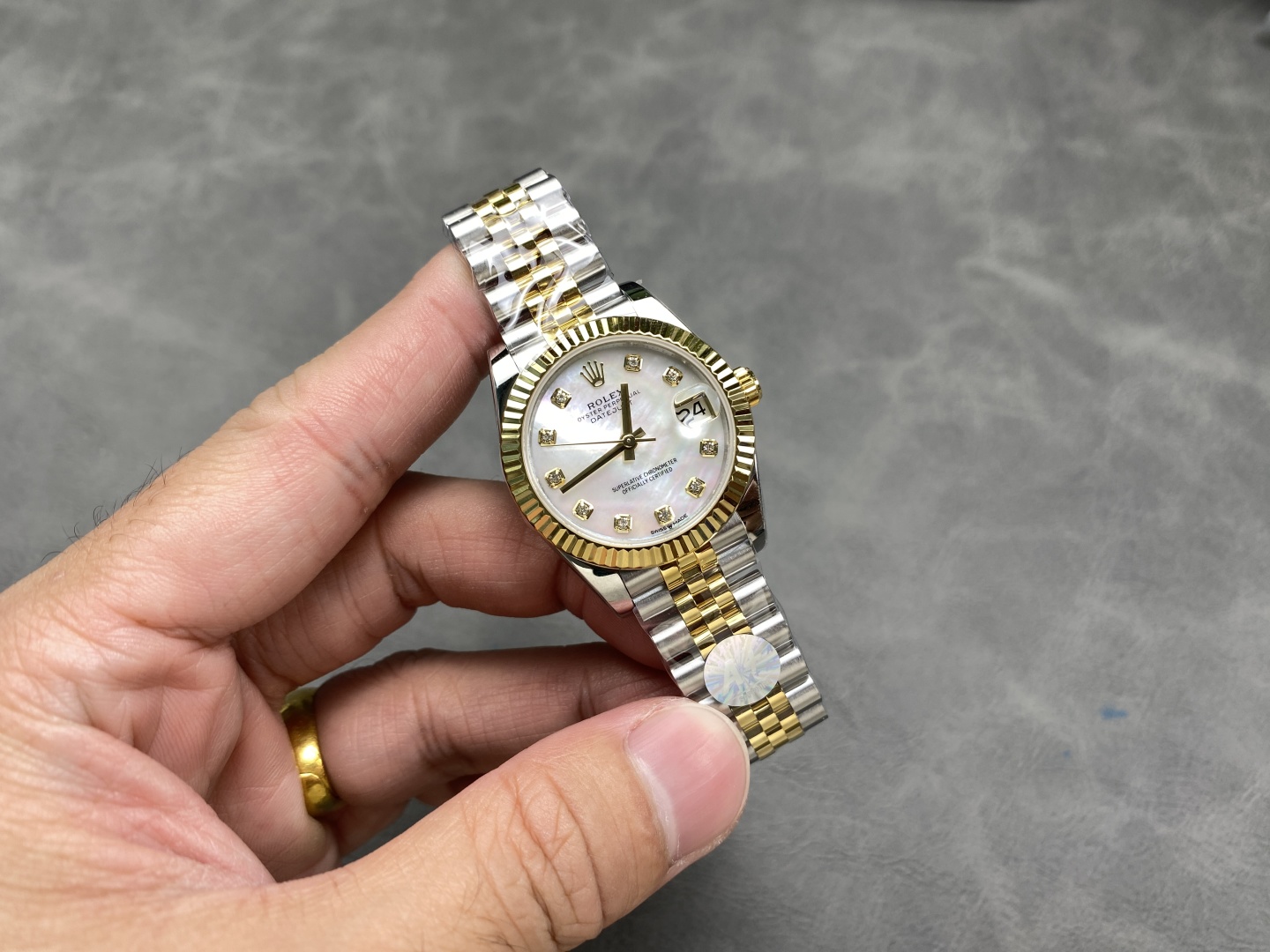
I have a simple rule: a watch that looks perfect under a macro lens but feels wrong on the wrist is a waste of money. The reverse is also true—a watch that has minor imperfections in the magnification but feels solid and comfortable is a winner. Let me explain why this distinction is critical for a Jubilee style replica.
What – The macro test involves using a loupe or a macro lens to inspect every detail: the laser engraving on the rehaut, the texture of the sunburst dial, the thickness of the date wheel numerals, and the exact shade of the lume. The wrist test is simply wearing the watch for a full day, noting how it feels, how it winds, how the bracelet moves, and how it catches the light in natural conditions.
Why – The macro test is misleading because no replica is 100% perfect under magnification. Even the best Clean factory dials have slight differences in the font stroke or the reflective angle of the sunburst. But these details are invisible when you are wearing the watch at normal arm’s length. The wrist test, on the other hand, reveals the aspects that actually matter: the movement’s smoothness, the bracelet’s comfort, the weight distribution, and the overall presence. A watch that scores 9.5/10 on the macro test might score 6/10 on the wrist test if the movement is noisy or the bracelet is stiff.
So what – I recommend that you base your buying decision on the wrist test as your primary metric, using the macro test only as a sanity check. Since you cannot try the watch on before buying, you have to rely on reviews from trusted sources who actually wear the watch. From what I’ve seen, the Clean 2236 Jubilee style replica performs very well on the wrist—it is balanced, quiet, and comfortable for 12-hour wear. The macro test will show minor flaws (like the date wheel not being perfectly centered), but those flaws do not affect the watch’s function or its look on your wrist. I’ve worn mine at dinners, meetings, and casual outings, and no one has ever commented on the cyclops or the rehaut. They comment on the overall elegance and the shine of the Jubilee bracelet. That is the real test.
My Personal Recommendations – Based on 2 Years of Wearing and Comparing
If you are ready to pull the trigger, here is my step-by-step advice based on my own purchases and the feedback from a small group of fellow buyers.
Choose the 36mm or 41mm? – If your wrist is under 7 inches, go with the 36mm. The Jubilee bracelet flows better on a smaller case. If you have a larger wrist, the 41mm is fine, but note that the 41mm version uses the 3235 movement in the genuine world, while the 36mm uses the 2236. Since the replica 3235 is still less refined than the 2236 clone, I strongly recommend the 36mm Datejust with the 2236 for the best overall experience. That is the combination I own, and it has been my most reliable replica.
Which factory to buy from? – Clean Factory for the 2236, without hesitation. I’ve compared it side-by-side with VSF and GM, and Clean’s movement is the most trustworthy. The case is slightly less sharp than VSF’s, but the movement wins. If you are willing to accept a slightly lower dial accuracy, Clean is the safe bet.
Where to buy? – I’ve used replicafactory.cx for my last two purchases, and they have been reliable. They provided detailed QC photos, answered my questions about the movement, and shipped quickly. I cannot guarantee every transaction, but my experience there was positive. Just be sure to ask them specifically for a Clean 2236 and request a video of the watch winding to check the rotor sound.
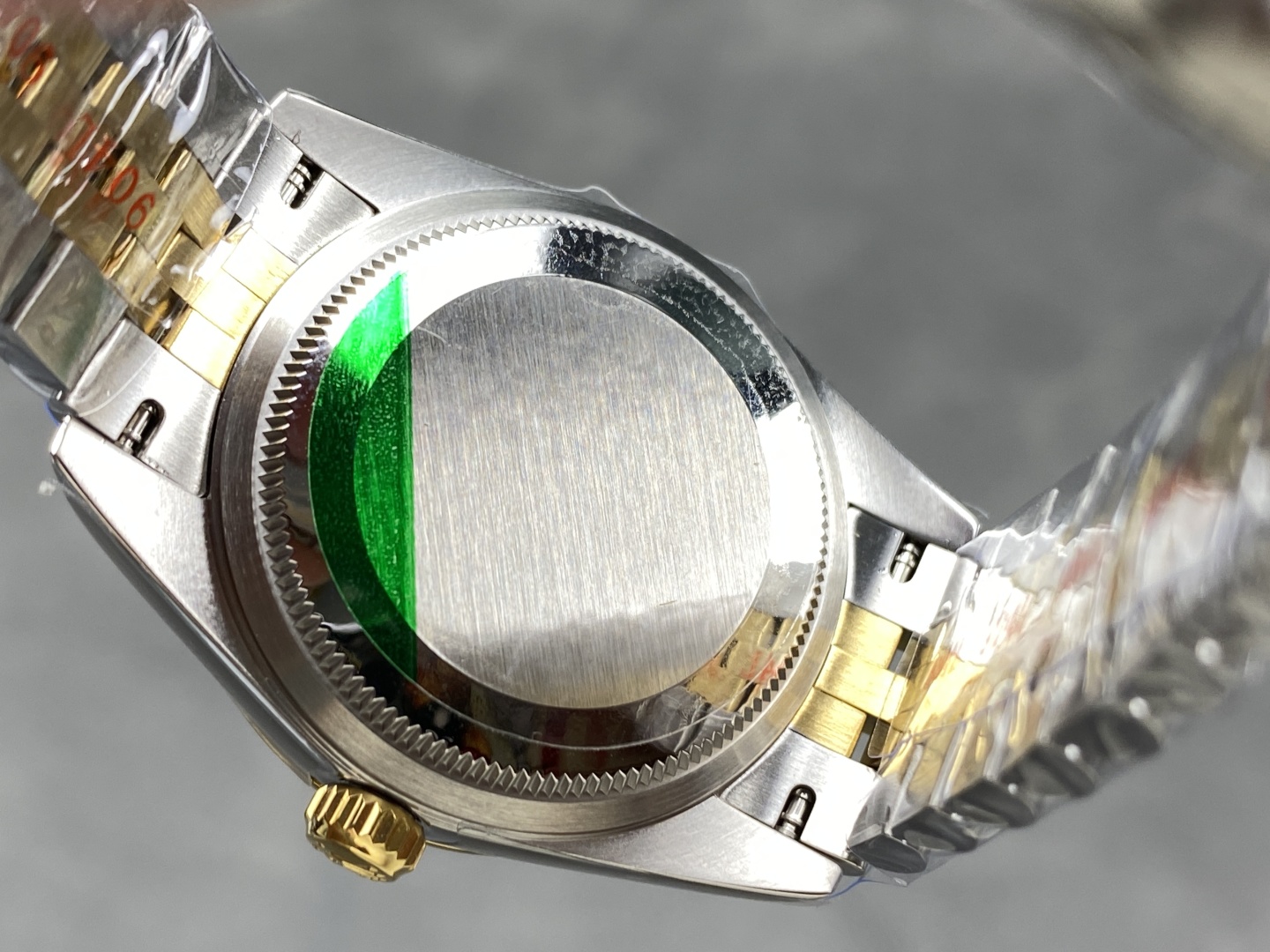
What to budget? – Expect to pay between $380 and $480 for a good Clean 2236 Jubilee style replica. Anything cheaper is likely a lower-tier factory (like GM). Anything more expensive is often overpriced without extra value. The price includes the watch, the box, and shipping. Do not pay extra for “Swiss” upgrades—they are a scam.
After-purchase care – Keep the watch away from strong magnetic fields (laptops, speakers) because the clone hairspring is not silicon and can magnetize. I’ve had mine magnetized once, and a demagnetizer fixed it in seconds. Also, do not wind the crown too vigorously—the winding mechanism is delicate. I wind it about 30 turns every two days, and it stays within spec.
Why Movement Specs Are Overrated for Most Buyers – A Realistic Take
There is a lot of talk about power reserve, beat rate, and amplitude. In my experience, these specs matter less than you think for the average buyer.
What – The specs are numerical measurements: power reserve in hours, beat error in milliseconds, amplitude in degrees, and daily deviation in seconds. Sellers love to boast about these numbers to prove their watch is “super.”
Why – The numbers are only meaningful if they are consistent and measured correctly. A seller might claim 70 hours, but the actual power reserve could drop to 50 in real use. The amplitude can vary depending on the winding state. More importantly, the specs do not capture the subjective experience of wearing the watch—the sound of the rotor, the tactile feel of the crown, or the way the bracelet interacts with the case.
So what – I would rather have a watch that feels great and runs +5 seconds a day consistently than a watch that runs +0 seconds but winds roughly and has a scratchy rotor. The 2236 clone from Clean runs about +3 seconds per day and feels smooth—that is good enough for me. The power reserve is not a deal-breaker; if I forget to wind it for a day, I reset it. The specs are a useful benchmark, but they should not be the deciding factor. The deciding factor should be the build quality, the fit, and the movement’s reliability over time. That is why I trust the 2236 from Clean—not because it hits 70 hours on paper, but because it has not failed me in months of daily use.
Frequently Asked Questions (Based on Real Buyer Concerns)
Yes, but only if you choose Clean or VSF. The cheaper factories use hollow links that rattle. Clean’s bracelet is solid, with a slight give that mimics the genuine’s flexibility. The clasp is not as crisp as the genuine’s micro-adjust, but it holds securely.
The date wheel is typically very close—the font matches the genuine’s serif style. The only common flaw is that the date is sometimes not perfectly centered in the window at 3 o’clock. This is a minor cosmetic issue that I’ve seen on many genuine watches as well. It does not affect functionality.
I would not recommend it. The replica’s water resistance is limited—the case back and crown are not sealed to the same standard. I’ve worn mine in rain, but I avoid submerging it. For swimming, you need a genuine or a properly pressure-tested diver.
With normal use, it should run well for 2-3 years. After that, the lubricants may dry out, and the timekeeping might drift. You can get it serviced by a watchmaker who works on clones, but it’s often cheaper to replace the movement (around $150). I’ve had mine for 8 months and it’s still perfect.
The 3235 is used in the 41mm Datejust and Submariner. The 3235 clone is less refined—it often has a longer power reserve but a noisier rotor and more beat error. The 2236 clone is more stable and quieter, which is why I recommend it for the 36mm Datejust.
No, they are plated. The plating can fade over time, especially on the edges. If you buy the stainless steel version with white gold indices (like the 126234), you avoid that issue because the markers are just silver-toned. I recommend the steel version to avoid fading.
Ask the seller for a photo of the movement through the case back, or ask for a video of the rotor spinning. Clean’s rotor has a specific engraving and a smooth, quiet spin. GM’s rotor is often louder. Also, ask the seller directly—they should be honest if you insist.
Reputable sellers like replicafactory.cx offer a return or exchange policy for defects (within a few days). Make sure you check the watch immediately upon arrival. I once had a date wheel sticking, and the seller sent a replacement within two weeks. Good sellers stand behind their products.
Final Thoughts – Is a Jubilee Style Replica Rolex Right for You?
If you are looking for a watch that looks convincing on the wrist, wears comfortably, and keeps decent time without constant annoyance, then a Clean 2236 Jubilee style replica is a strong choice. It is not a genuine Rolex, and it never will be—but it gives you 90% of the experience for 5% of the cost. The key is to get the right movement, from the right factory, and to manage your expectations regarding the microscopic details.
In my experience, the 2236 from Clean is the sweet spot. It balances reliability, aesthetics, and price better than any other option on the market right now. If you decide to buy, use the guidelines here to ask the right questions, and you will avoid the mistakes I made. At the end of the day, a replica watch is a tool for enjoyment—it should not be a source of stress. Choose wisely, and you will get many years of satisfaction from it.
This article is based on my personal experience and the collective feedback of a community of watch enthusiasts. No brand endorses this content. All opinions are my own.